
Veneer vs Solid Timber: When and Why Furniture Makers Use Veneer
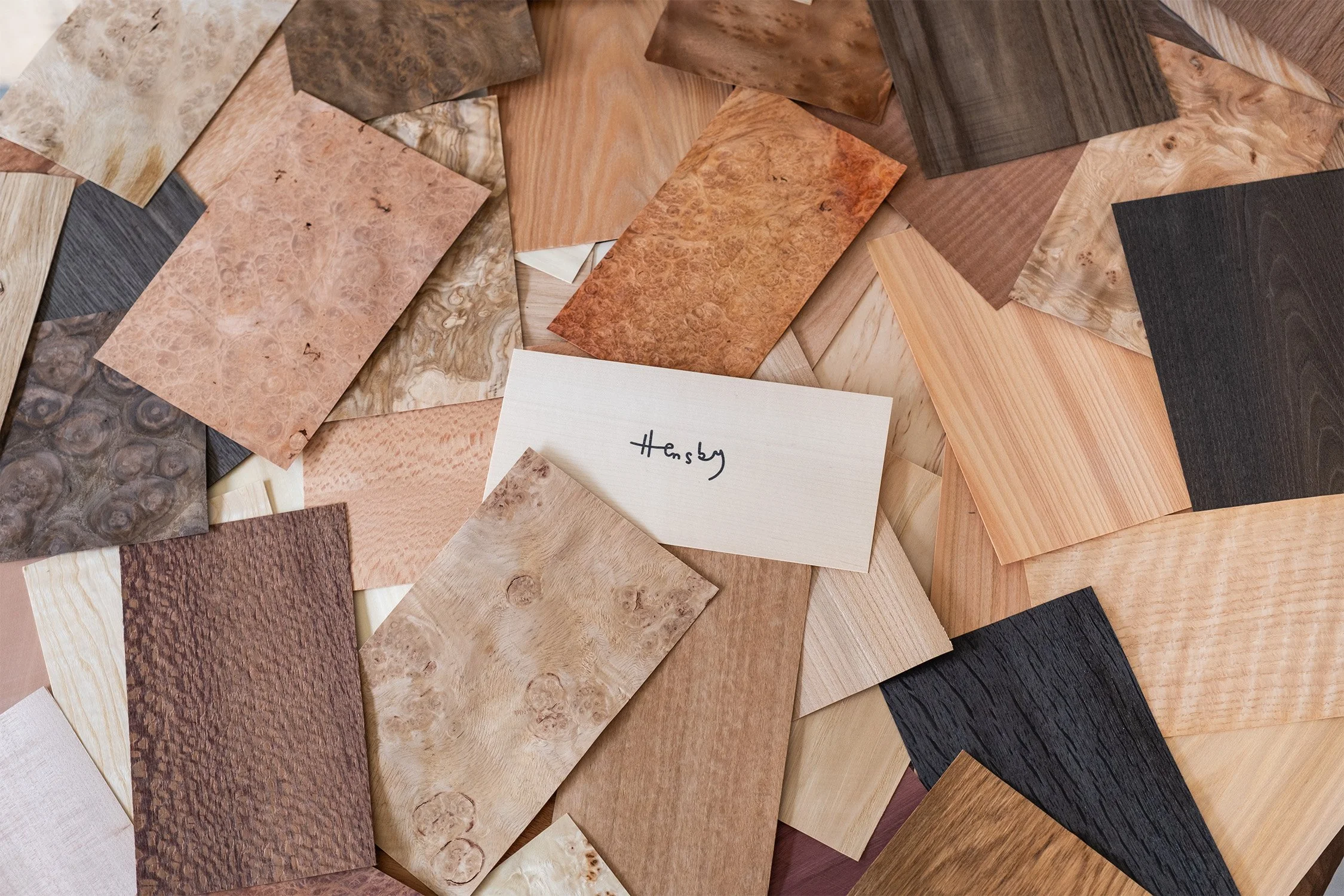
I've recently been putting together a box of veneer samples for a client. The project is still in development, but it required a fairly exhaustive selection of options, so I spent a morning at my veneer merchant which got me thinking about its place in furniture making.
Like many people, I suspect I started out with the view that solid timber was inherently preferable. Veneer was often presented as a compromise, or worse, a way of making something look like timber without actually being timber. While there is certainly some truth to that in the world of mass-produced furniture, I've become increasingly appreciative of veneer over the years.
One reason is that some of the most remarkable timber available to furniture makers is only realistically obtainable as veneer. Highly figured logs, whether burr, pippy, bird's-eye or quilted, are often purchased by veneer manufacturers because slicing them into veneer makes far better use of a rare resource than sawing them into thick boards. As a result, if you're looking for particularly exceptional figure, veneer often provides access to material that would be difficult, if not impossible, to find in solid timber.
There are also practical considerations. Timber moves, and good furniture design has to accommodate that movement. Some designs can do so easily, while others become unnecessarily complicated or simply unworkable if made entirely from solid timber. Veneering onto a stable substrate can solve those problems while still retaining all of the visual qualities of the timber itself. Indeed some of the finest examples of furniture are made from combination of solid and veneers elements.
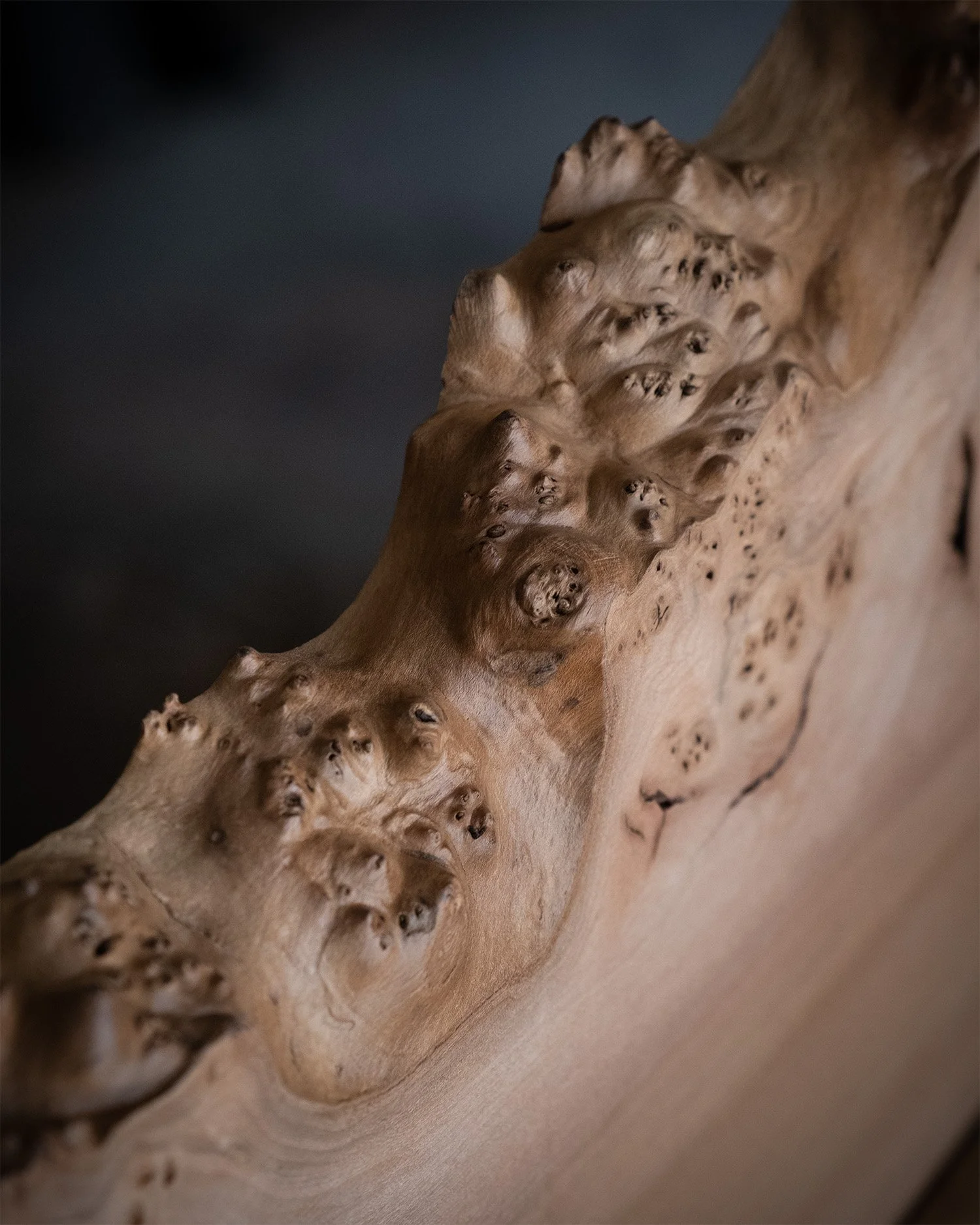
Some features of solid timber simply can’t be replicated by veneer
Not all veneered furniture is created equal, however. There is a considerable difference between a factory-made veneered panel and one produced in a cabinetmaking workshop. Veneering by hand involves selecting veneers, arranging them, pressing them onto a substrate and often incorporating solid timber lippings beneath the veneer at the edges to improve durability. Much of this work is invisible once the piece is finished, but it has a significant bearing on both quality and longevity.
Interestingly, this also means that veneer is not necessarily the cheaper option people often assume it to be. In mass production, veneer can reduce costs. In bespoke furniture, the opposite is often true. While the raw material may be less expensive than equivalent solid timber, the additional labour involved in preparing and pressing veneered work can quickly offset any saving.
None of this is to suggest that veneer is superior to solid timber. There are many situations where solid timber remains the most appropriate material. Deep carving, sculptural work and heavily worked edges are obvious examples. And while I remain instinctively drawn towards solid timber construction, over time I've become less interested in the idea that one is inherently better than the other.
The more useful question is which approach best suits the piece being made.
Like most things in furniture making, the answer depends on what you're trying to achieve.
