Can traditional furniture making survive in London?
My great great grandfather was apprenticed to a cabinetmaker in Holborn in the 1800s. Thinking about that part of London today, it is hard to imagine furniture workshops sitting so deeply in the centre of the city. But while Holborn is now characterised by legal chambers and corporate offices, not that long ago workshops were once a familiar sight in central London.
Thomas Chippendale, the 18th-century cabinetmaker whose name became synonymous with English furniture making, operated from St Martin’s Lane near Covent Garden. His premises brought together workshops, design office and up to 50 craftsmen under one roof, close to the artists, patrons, designers and clients who shaped London’s cultural life. It was not simply a place where furniture was made. It brought the different parts of a furniture business together, with the designing, making, and presentation of work all happening in close proximity.
Today, the city is still very good at presenting design. It has showrooms, galleries, design fairs, architects, interior designers, collectors and clients. For bespoke furniture, it remains one of the most important places to be connected to.
But while London can still celebrate craft, the spaces in which it can actually be made have become increasingly scarce. As workshops move out there is a growing distance between the culture that commissions and presents this work, and the workshops that produce it.
That distance matters because a good furniture workshop is not just the production end of the design process. At its best, it is part of the design process itself. It tests ideas against material, process, construction and use. It exposes the difference between something that looks right in a drawing and something that can be made well. If workshops are pushed further away that conversation becomes weaker.
This is not happening because London has stopped valuing craft. In some respects the opposite is true, with craft-led work now featuring prominently in galleries, design weeks, retail displays, hotel interiors and private houses. The question is how and where the city will make room for the workshops, makers and working cultures that allow that furniture making to flourish.
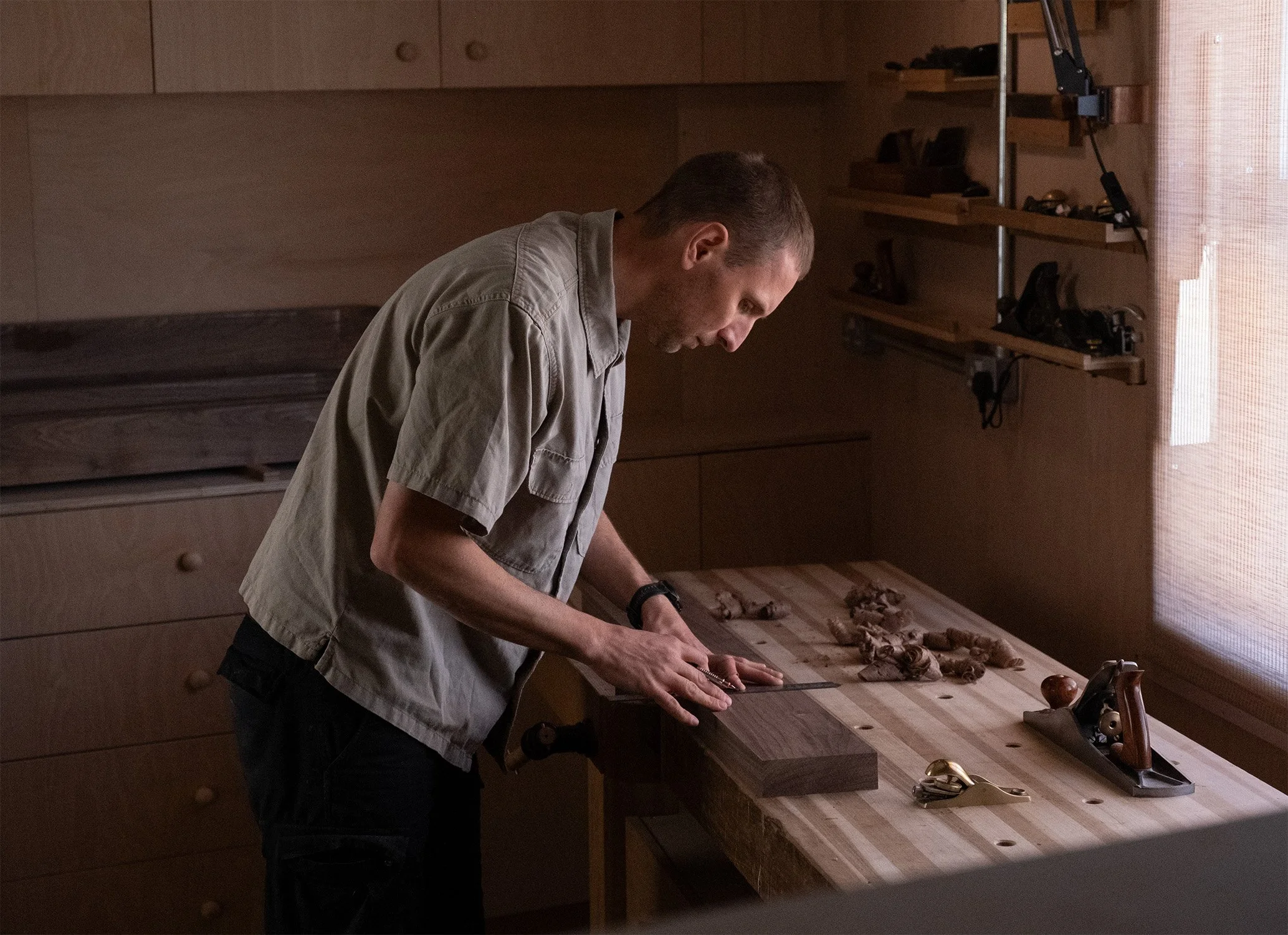
While I am not able to operate from a central London address in the way Chippendale once did, I do feel fortunate to have been able to open a new workshop in my home city. In a smaller and more contemporary form, I am interested in bringing some of those elements back together: a place where furniture is designed and made, but also where clients can visit, discuss commissions, see work in progress and understand more of the thinking behind the finished pieces.
If you’d like to come by and talk over a commission, our doors are now open.