
PRICING GUIDE
Every piece we make is priced individually. The cost of a commission depends on the design, dimensions, timber choices, level of hand-work involved and the overall time required to make the piece.
The prices below are intended to give a useful sense of likely costs before making an enquiry. These are not fixed prices, and some pieces may come in lower or significantly higher depending on the particular commission. If you would like a more accurate idea of how much a project may cost, please get in touch and we would be very happy to talk it through with you.
Prices are shown excluding VAT.
Coffee tables: from £2,500
Dining tables: from £5,000
Most domestic dining table commissions fall below £10,000, while larger, more detailed or technically involved tables can sit between £10,000 and £20,000+.Desks: from £4,000
Desks with drawers, hand-cut dovetails, shaped details or more complex internal construction will usually sit higher within this range.Sideboards: from £5,000
Sideboards vary considerably depending on their size, internal layout, doors, drawers, hinges and level of visible joinery.Dressers and other full height cabinet pieces: from £10,000
Larger freestanding pieces, especially those with multiple drawers, doors, specialist interiors or detailed construction, will usually require a higher budget.Benches and seating: from £2,000
Simple benches start lower, while live edge benches, carved seating, spindle-back forms or more involved chair-making structures will usually sit higher.Chairs: from £800 per chair
Individual chairs generally range from £800 to £2,500+, depending on the design, timber, construction and level of hand-shaping involved.
WHAT AFFECTS PRICE?
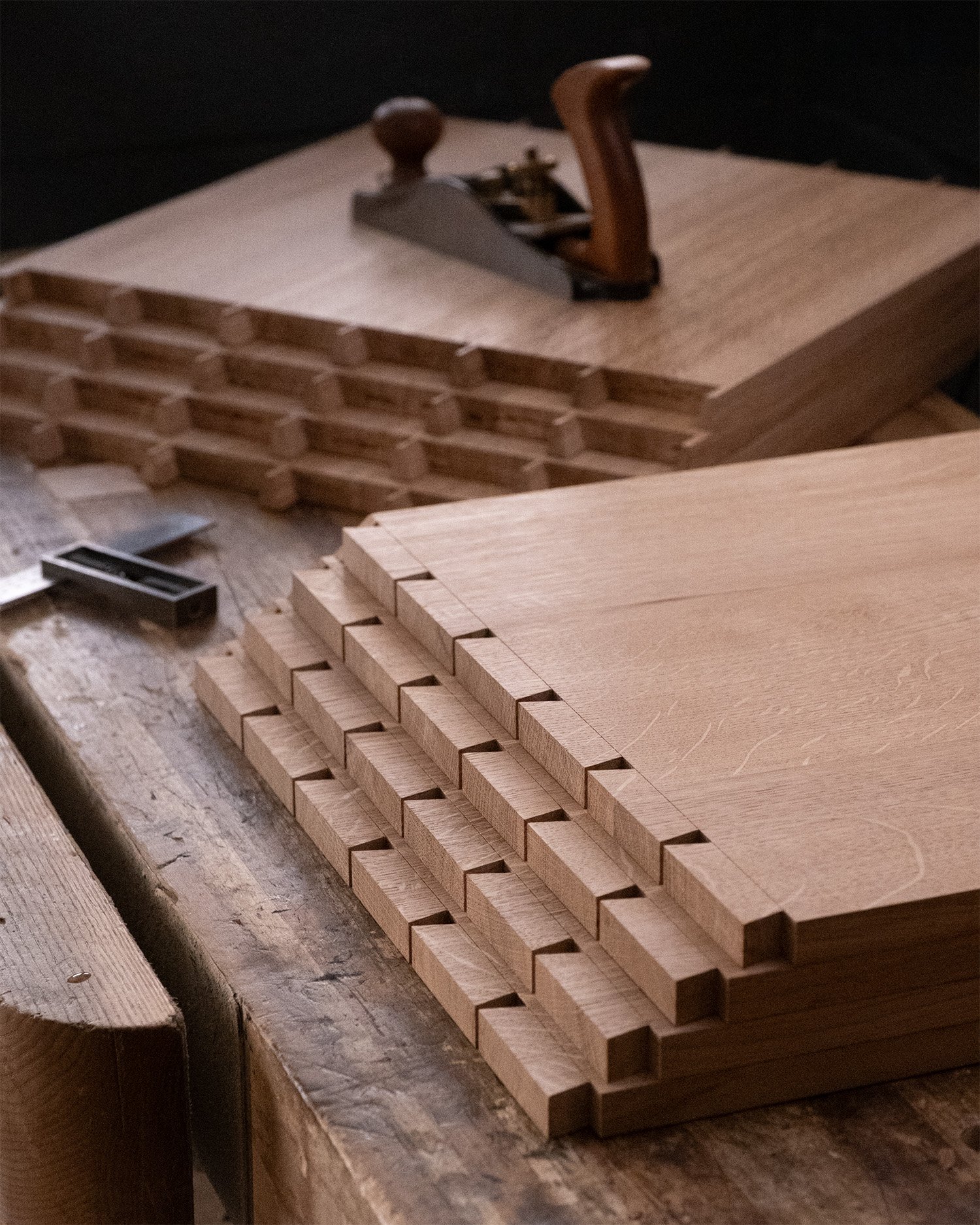
The price of a piece is usually shaped by a combination of five main factors: scale, material, complexity, level of hand-work and design development.
A simple piece in a carefully selected timber may require less making time than a highly detailed piece with drawers, doors, hand-cut joinery, carving, specialist finishing or complex internal construction. In many cases, two pieces of similar size can vary considerably in price because of what is happening in the details.
DRAWERS
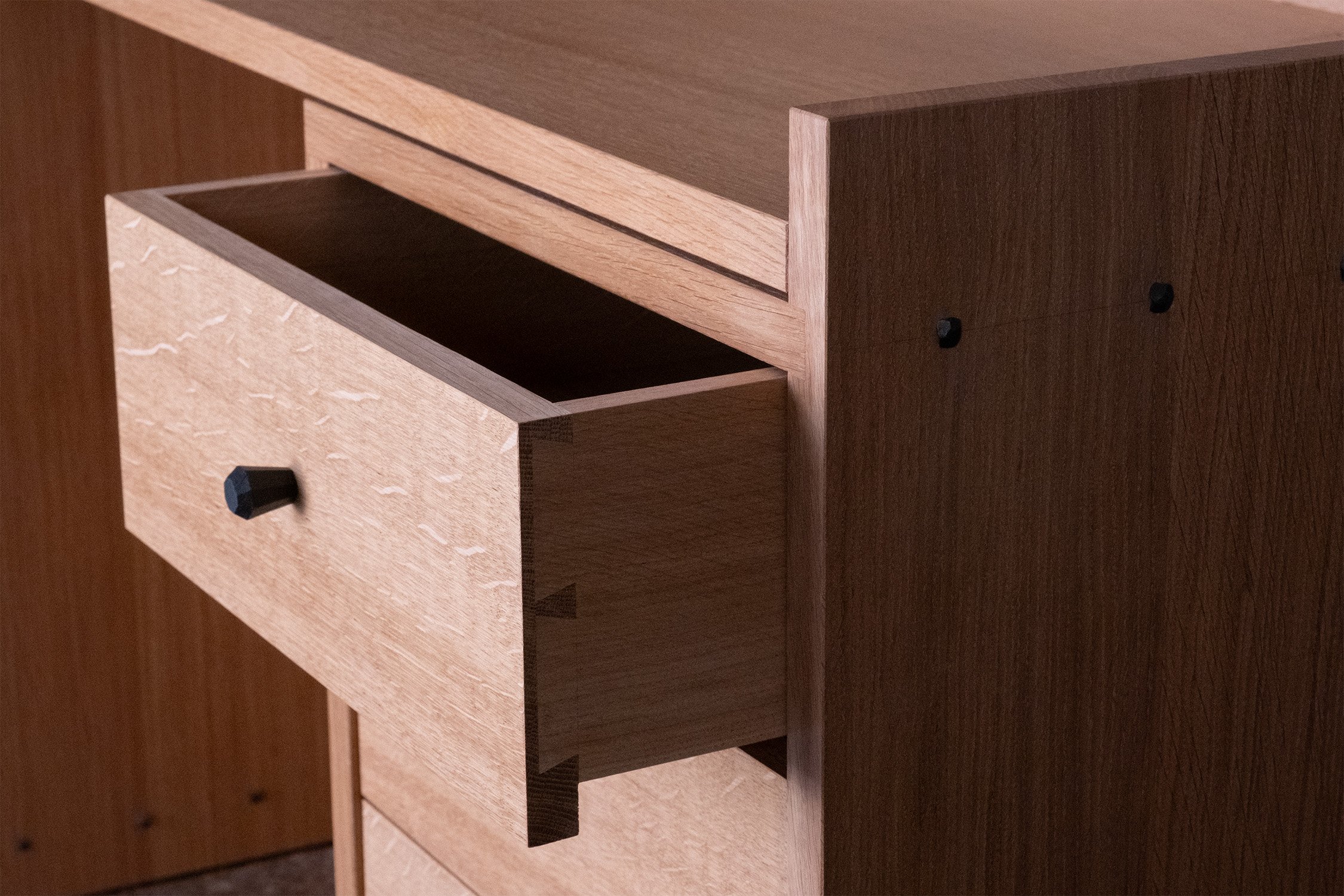
Drawers add considerable making time, particularly when made using traditional hand-cut dovetails.
As a basic guide, hand-cut dovetailed drawers typically add around £600 per drawer, assuming no major additional carcass modifications are required. This reflects the time involved in making the drawer box, cutting and fitting the joinery, fitting the drawer to its opening, and resolving the runners, stops, pulls and internal details.
Other drawer construction methods may be possible at a slightly lower cost, depending on the design and feasibility, but hand-cut dovetailed drawers are our usual approach where the detail is appropriate to the piece.
DOORS AND HINGES
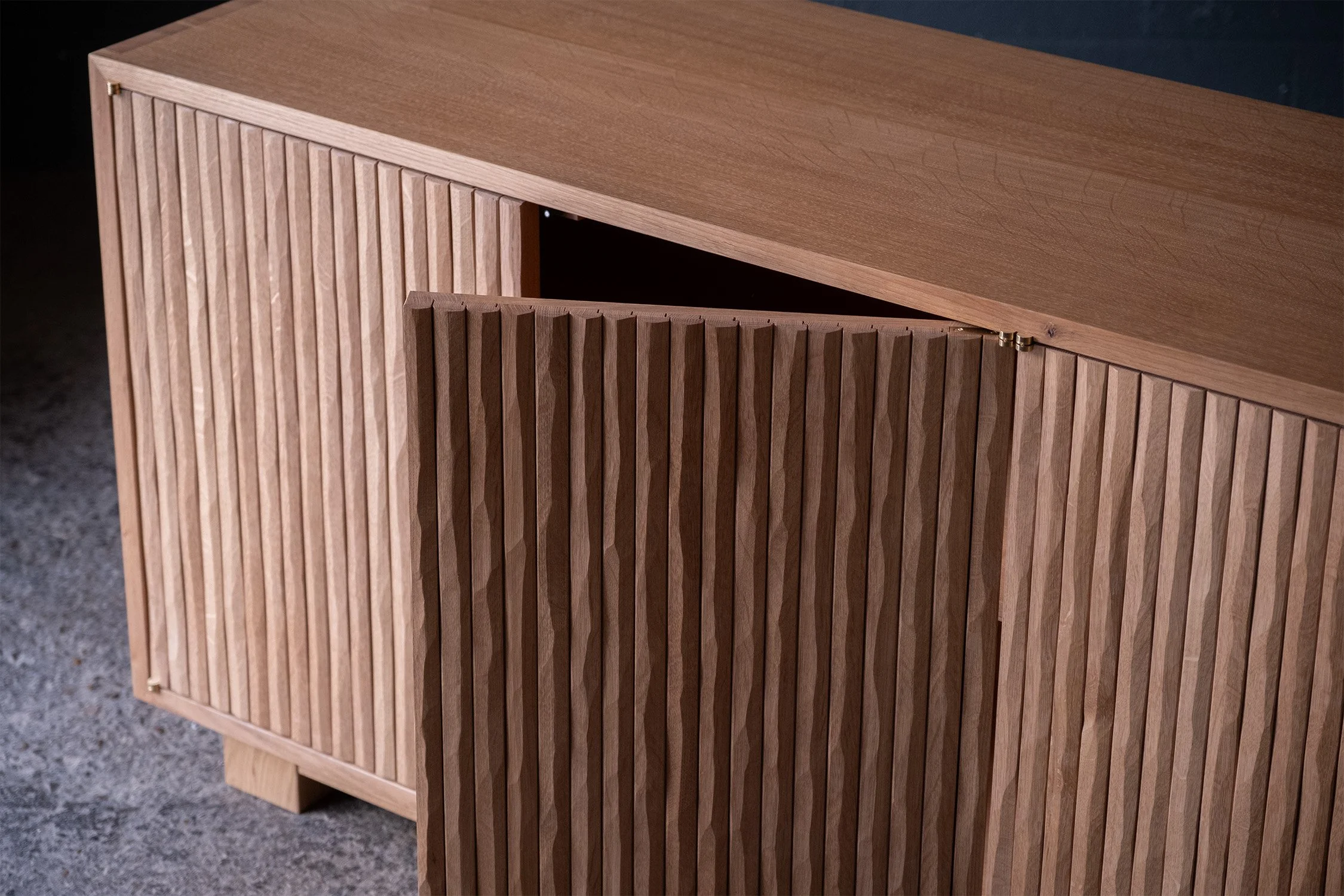
Cupboard doors can be hung in a variety of ways, and the hinge choice affects both the appearance and the making time.
Traditional brass knife hinges or butt hinges can be very elegant and discreet, but they are more expensive and take longer to fit accurately. Modern concealed or soft-close hinges may be more appropriate for some designs and can sometimes be more straightforward, depending on the construction.
The hinge choice is therefore considered as part of the design and pricing, rather than treated as a purely functional detail.
LIVE EDGE AND LARGE SLAB TIMBER
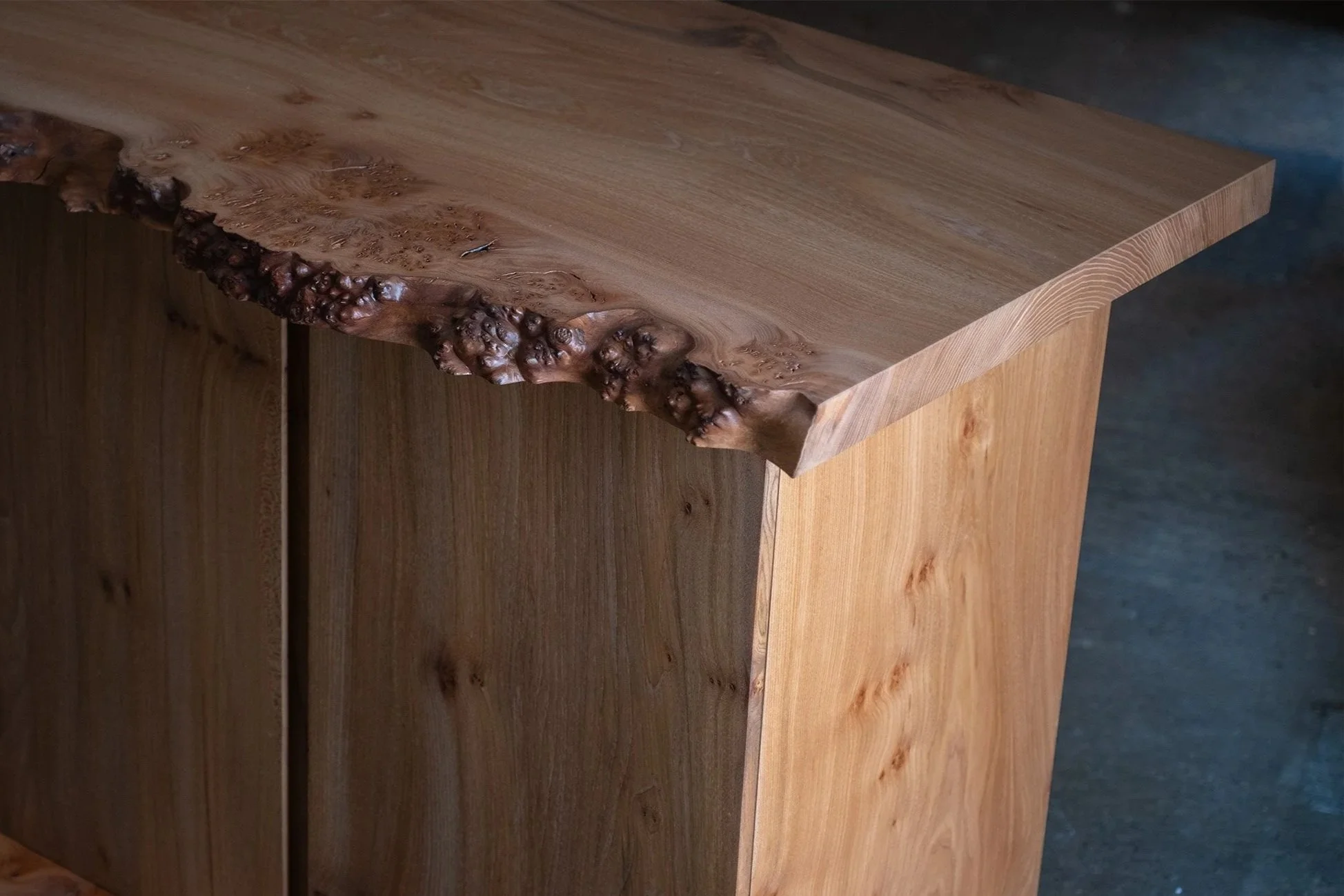
Live edge pieces, and pieces made from large single slabs of timber, are priced differently from more standard board-based furniture. Timber of this type needs to be selected individually, often around a particular board, figure, edge shape or proportion.
This can involve more sourcing time and more design work to make the finished piece feel resolved rather than simply made from an interesting board. The natural shape of the timber also brings additional technical considerations, including movement, stability, thickness, drying, flattening, shaping and the way the board is supported.
For that reason, live edge and slab-based pieces are priced according to the specific timber and design, not by size alone.
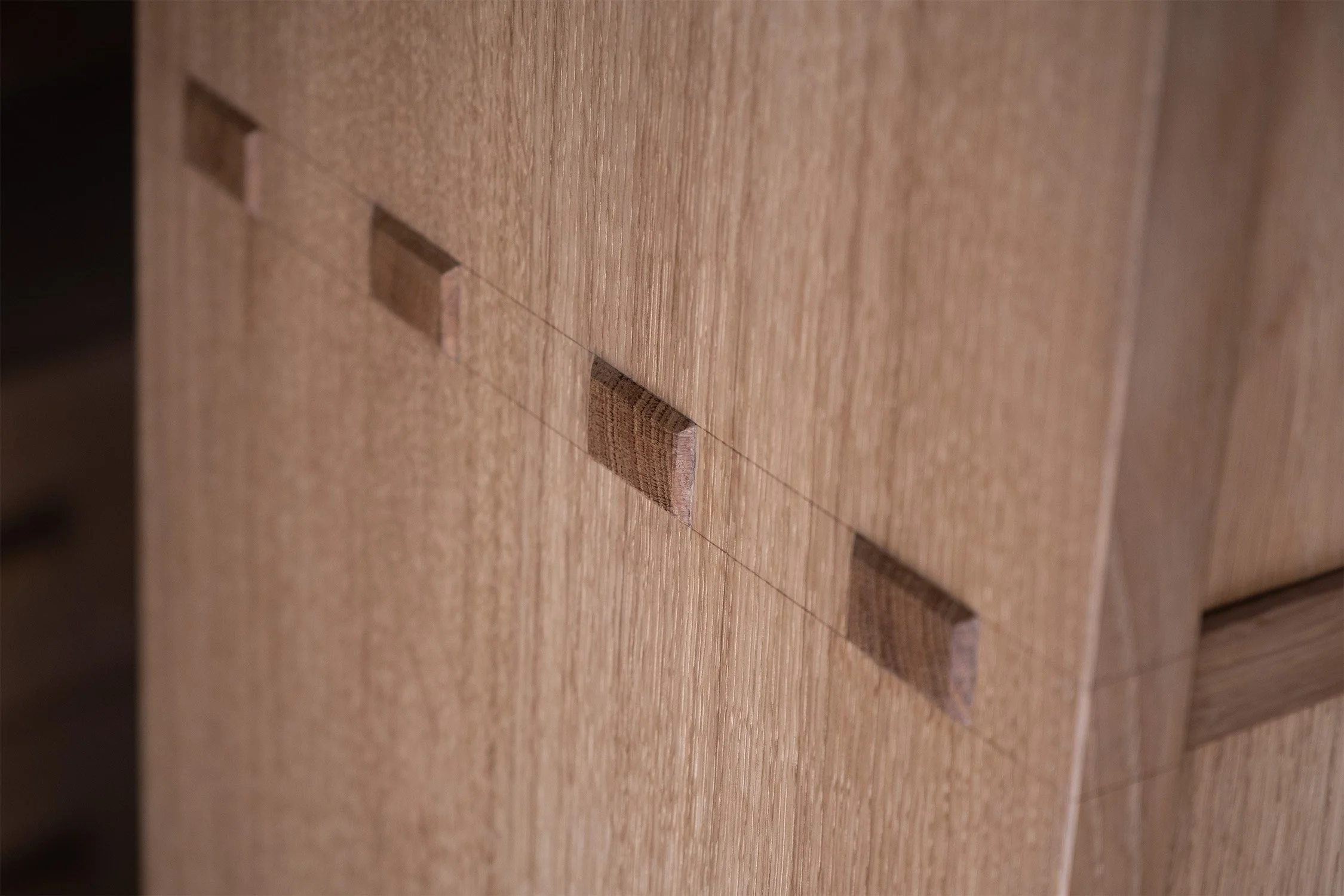
VISIBLE EXTERNAL JOINERY
Some pieces use visible external joinery, such as a hand-cut dovetailed carcass. This is a much more involved construction method than a hidden or mechanically fixed joint.
The joinery has to be structural, accurate and visually refined, because it forms part of the finished character of the piece. It requires careful setting out, cutting, fitting and finishing, and can add significantly to the making time.
Visible hand-cut joinery can increase the cost of a piece, but it also gives the work a level of detail and permanence that is difficult to achieve through simpler construction methods.
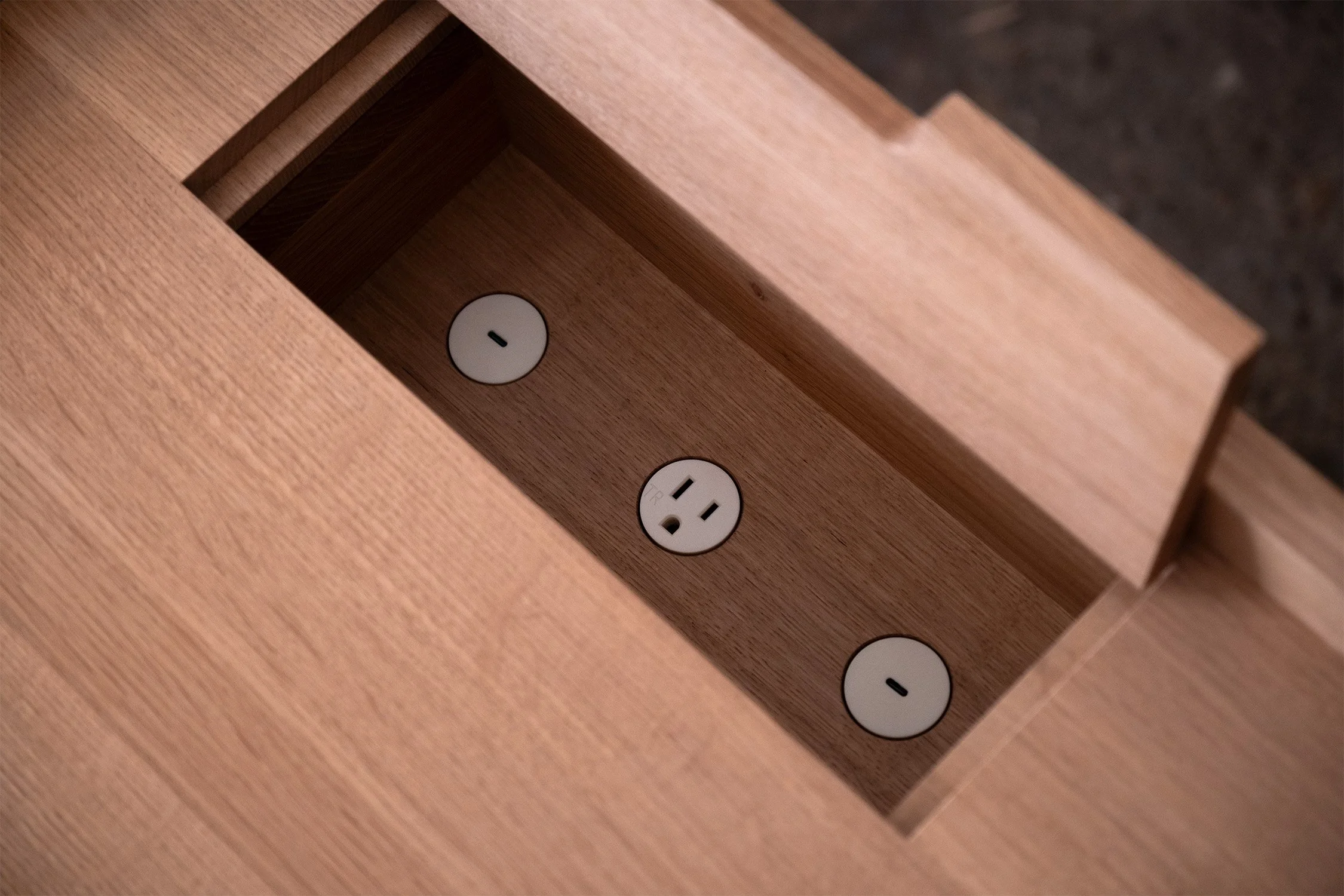
INTERNAL CABINET CONFIGURATIONS
The internal layout of a cabinet can have a substantial effect on the price.
Open storage is usually more straightforward. Drawers, dividers, adjustable shelves, power sockets, hung or sliding doors, cable management, specialist compartments, all add design and making time.
In many cases, the outside of two cabinets may look relatively similar, while the internal configuration makes one much more complex to design and build.
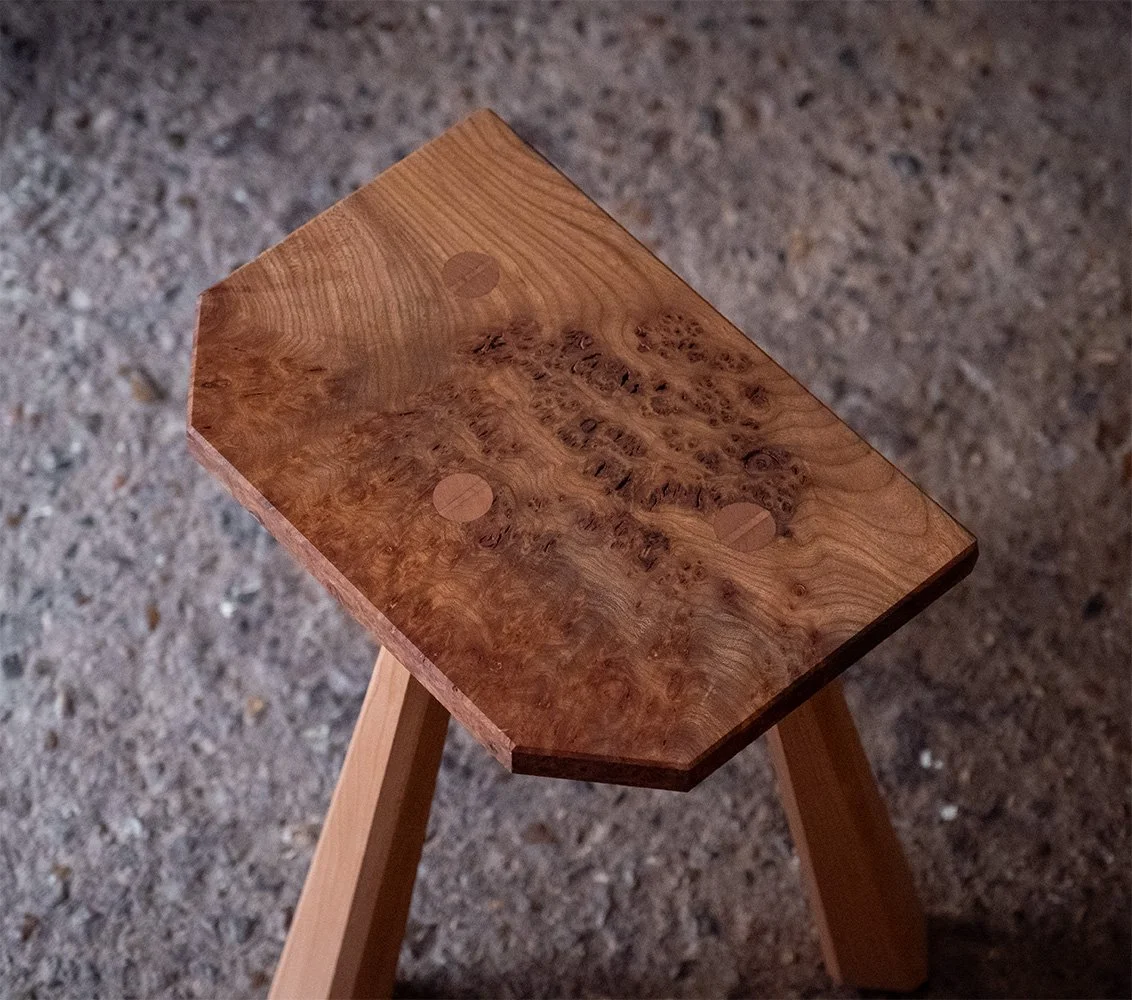
MATERIALS
Material cost varies depending on species, quality, board size, figure, and availability.
A carefully selected timber is often central to the character of a piece. Some commissions require boards of a particular width, figure, colour or cut, while others may involve more unusual or harder-to-source material. Larger boards, highly figured timber, live edge slabs, quarter sawn stock and specialist veneers can all affect the final price.
The material is always considered alongside the design, rather than treated as a separate decorative choice.
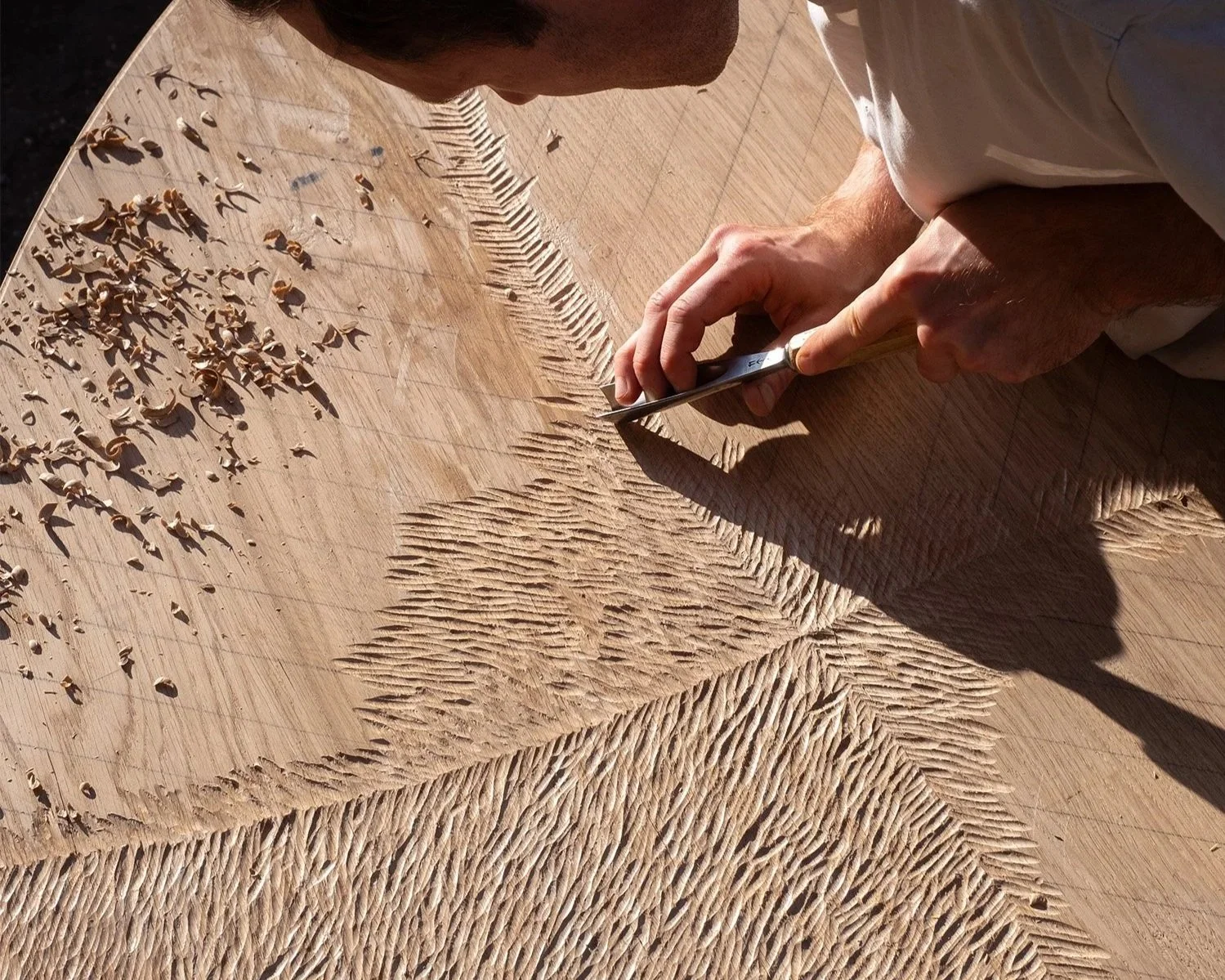
HAND APPLIED SURFACE DETAILS
Hand-work can be a significant part of the cost of a piece.
Carving, shaped components, hand-planed surfaces, and textured details all take time. These details are often what give the work its character, but they are also labour-intensive and need to be priced accordingly.
Where a piece is highly shaped, carved or detailed, the cost will usually sit above the basic guide price for that furniture type.
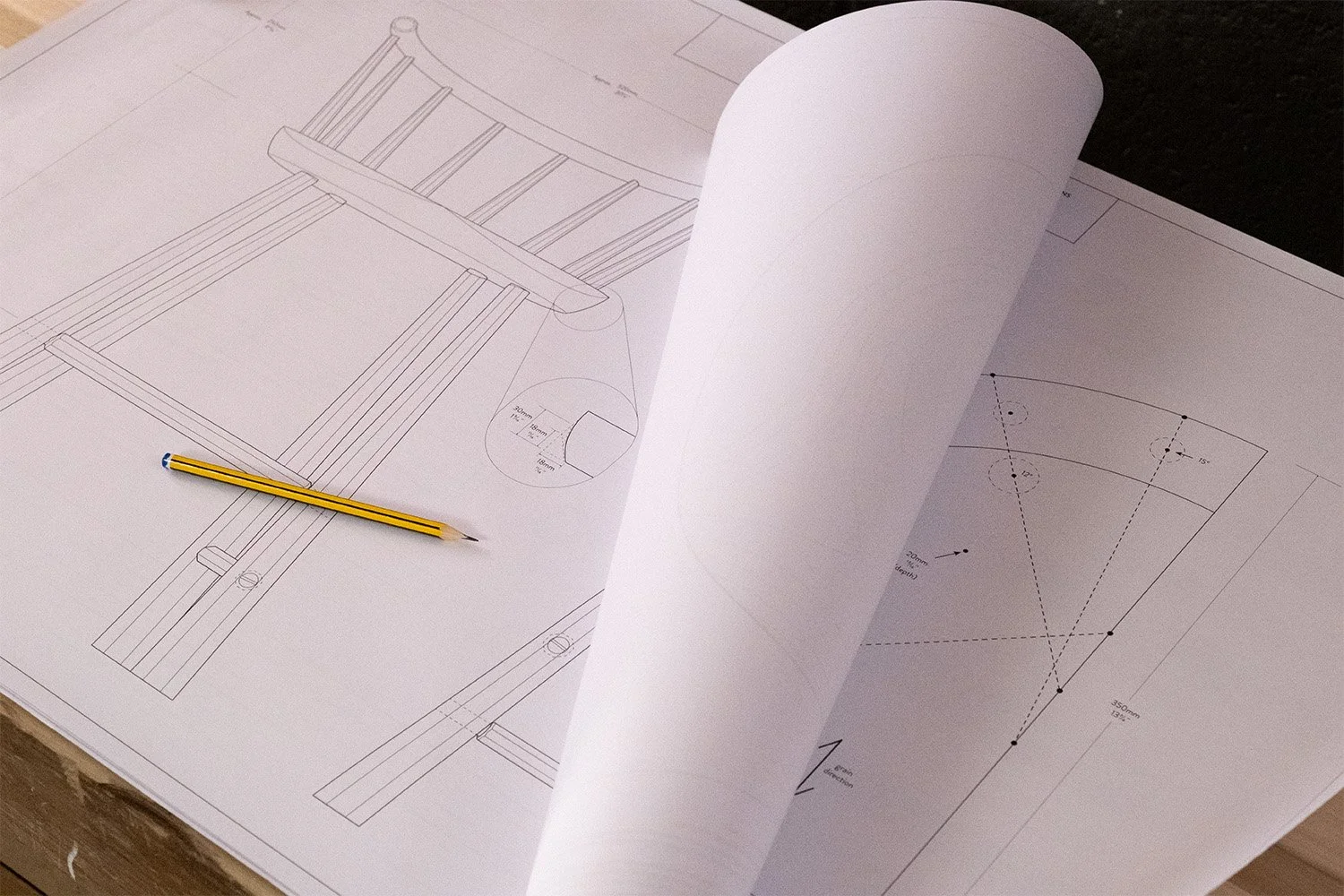
DESIGN FEES
The design fees below are indicative starting points. Each project is quoted individually according to its scope and complexity, with the fee, deliverables and included revisions agreed before work begins.
Technical Design — from £450 + VAT
For a resolved design supplied by you or your designer. This covers the drawings and construction details needed to prepare the piece for making.
Design Development — from £1,800 + VAT
For a clear brief or an agreed design direction. We develop one design, resolving its proportions, dimensions, materials and finish.
Design Exploration — from £4,500 + VAT
For a more open brief. The agreed scope can include research and up to three initial concepts, followed by further development of one selected direction. Workshop trials may be included where agreed to resolve materials, finishes or details.
An unchanged repeat of an existing Hensby design carries no new design fee.
DESIGN AND MAKING PAYMENTS
We establish an indicative overall commission budget before the paid design stage begins. The design fee is a separate, paid component of that budget and is paid in full upfront.
Once the design is approved, we confirm the remaining making price before you commit to manufacture. A deposit of 50% of the making price books the commission into the workshop. The remaining 50% is due before delivery.
Typical making lead times are 8–12 weeks. The timing for each project is confirmed individually in your quotation.
For an outline of the commissioning process, see How We Work.
HOW TO MAKE AN ENQUIRY
When making an enquiry, it is very helpful to have an idea of budget at the outset. This does not need to be exact, but it gives the conversation a useful direction.
It also helps to include any relevant information you already have, such as approximate dimensions, reference images, photographs of the space, preferred timbers, timescale and any practical requirements.
From there, we can advise what is feasible, where the design might go, and which materials or construction methods would be appropriate.