
Explorations in Birch Bark: Part 1
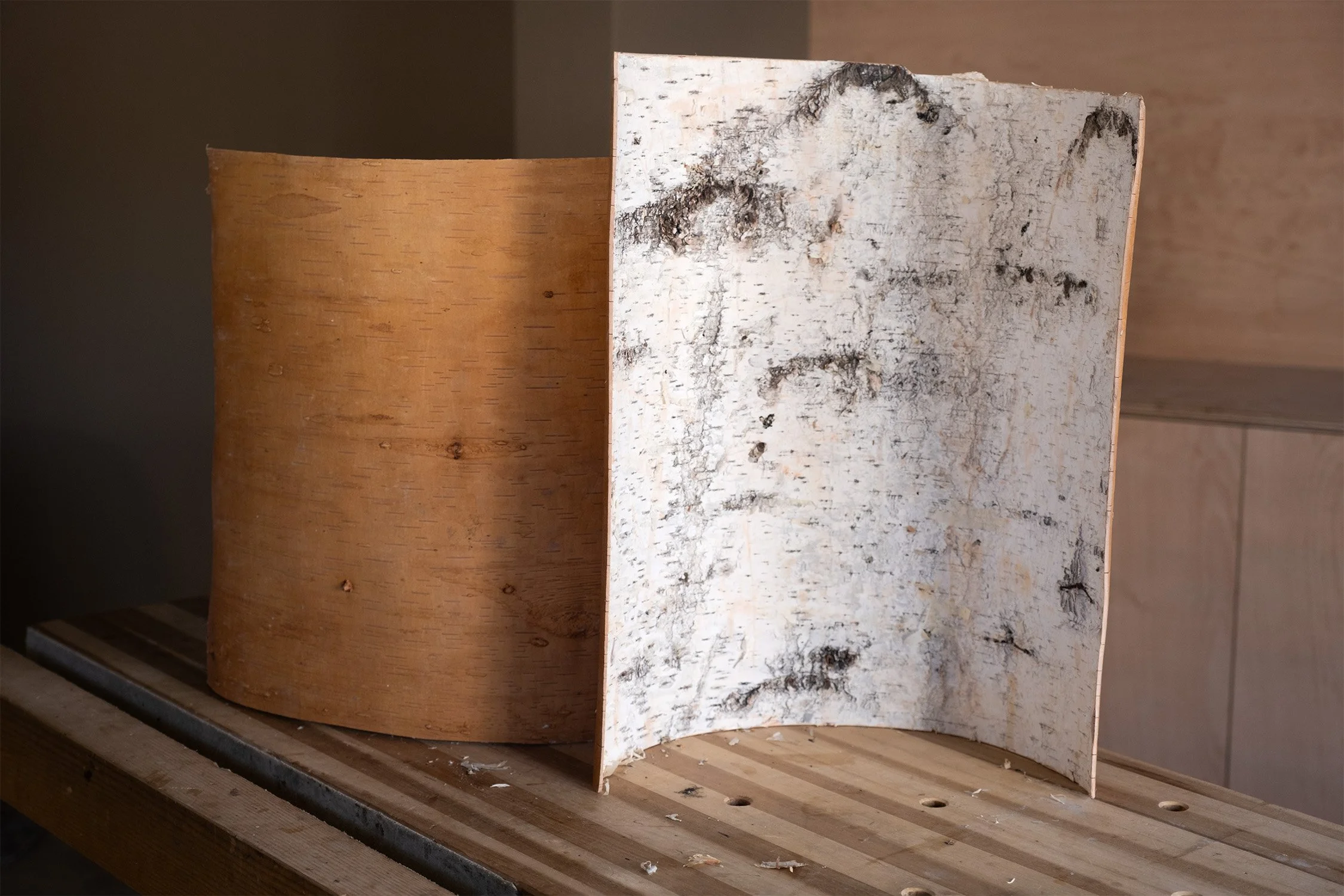
With applications for the residency programme opening today, I’d like to share some of my own recent experiments exploring ways of working with a new material to me.
Birch bark is a fascinating material with a long history of practical use, from containers and canoes to waterproof layers beneath turf roofs. It can be woven into baskets, split into thin layers or processed by heat into an adhesive tar. Its lightness, flexibility and resistance to moisture have made it useful in many different ways.
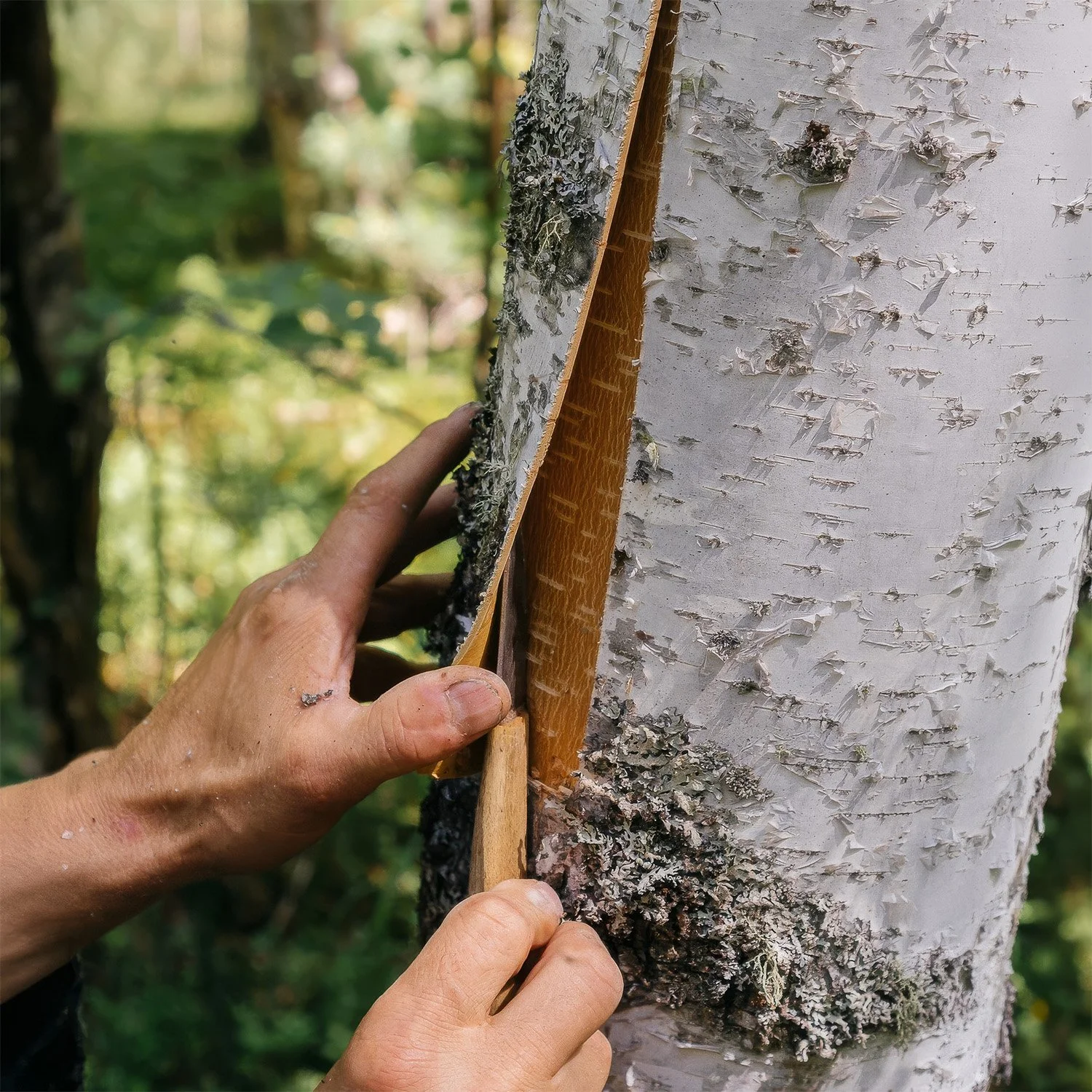
Image Courtesy of MOYA Birch Bark.
The outer bark can be harvested without felling the tree, and provided the living tissues beneath remain intact, a new protective layer can develop over time. A knife is used to score the outer bark, which is then carefully eased away by hand.
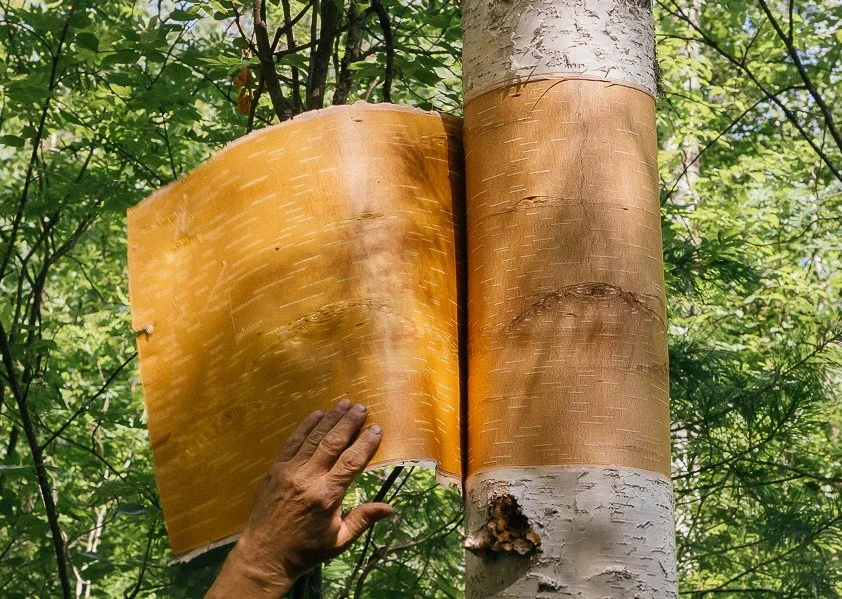
Image Courtesy of MOYA Birch Bark.
My own experience of harvesting is still limited, but watching a large, continuous sheet of bark lift away from a trunk is an amazing experience. The resulting sheets reveal two very different surfaces: the familiar silvery, peeling exterior and the warm, golden, almost leather-like surface that lay against the tree. A continuous sheet of this scale is part of what makes birch bark so intriguing for furniture. Its dimensions are set by the tree and by how carefully the bark can be removed.
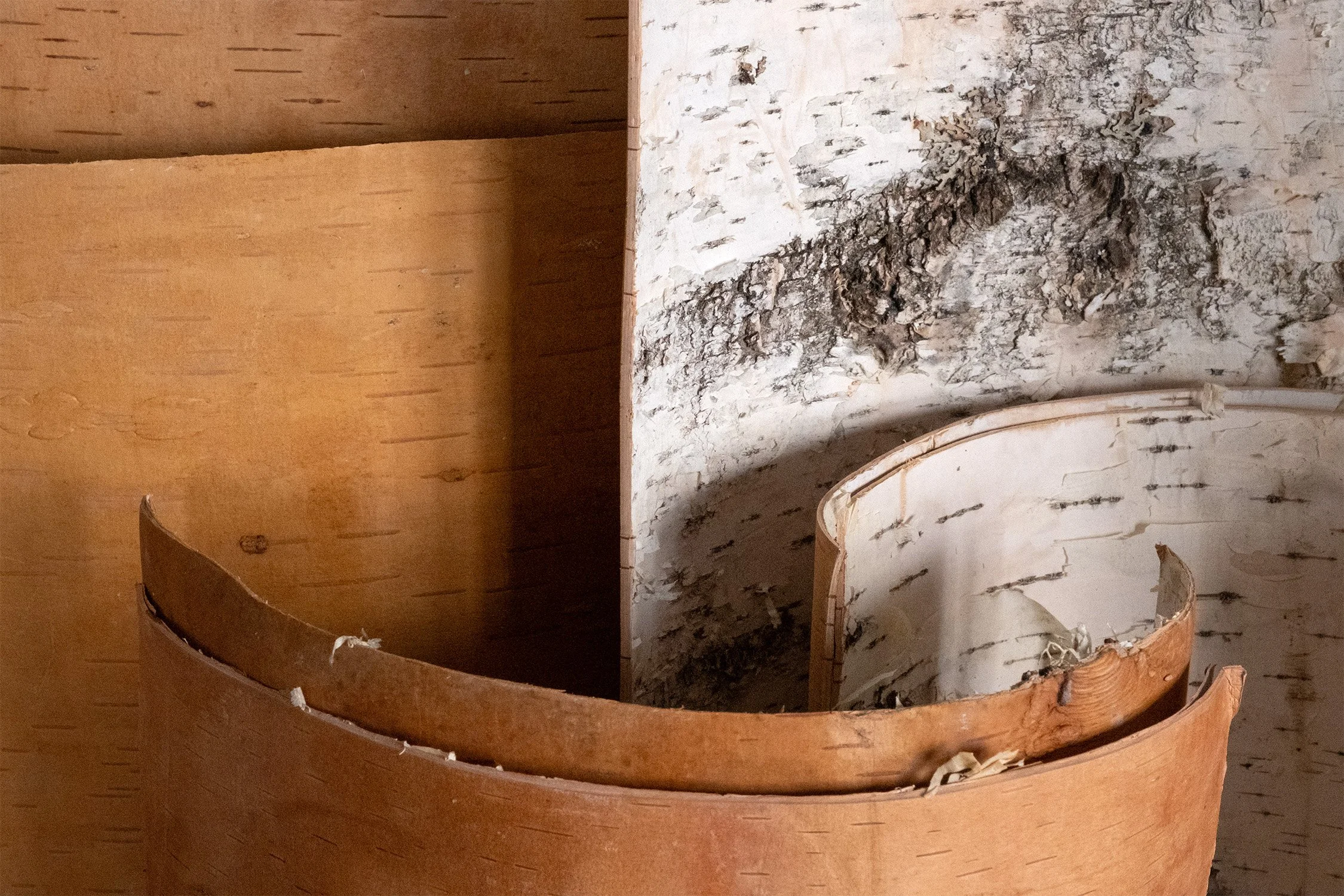
The inward-facing surface of the outer bark.
I am drawn to this surface for its warm colour, fine markings and texture that recalls leather.
For these first experiments, I am using Siberian bark. In time, I would like to explore harvesting my own supply in the UK. Harvesting is seasonal, with bark generally separating most readily in late spring or early summer.
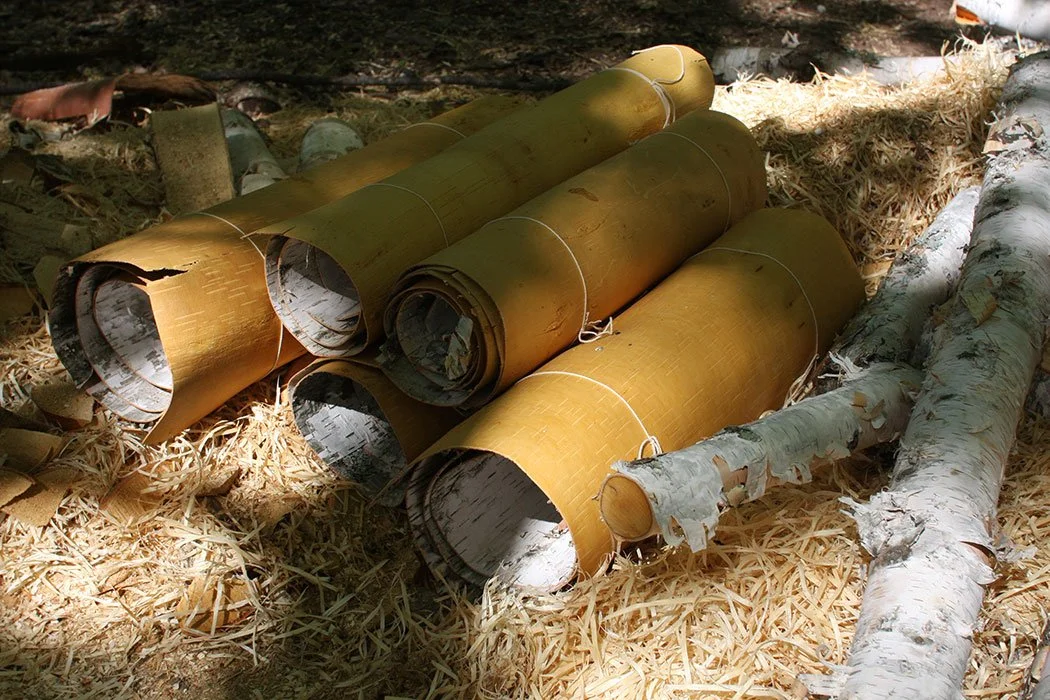
Rolled sheets of harvested birch bark. Image Courtesy of MOYA Birch Bark.
The sheets become stiffer as they dry. Careful rehydration can make the bark more pliable again, though its tendency to curl remains part of working with it.
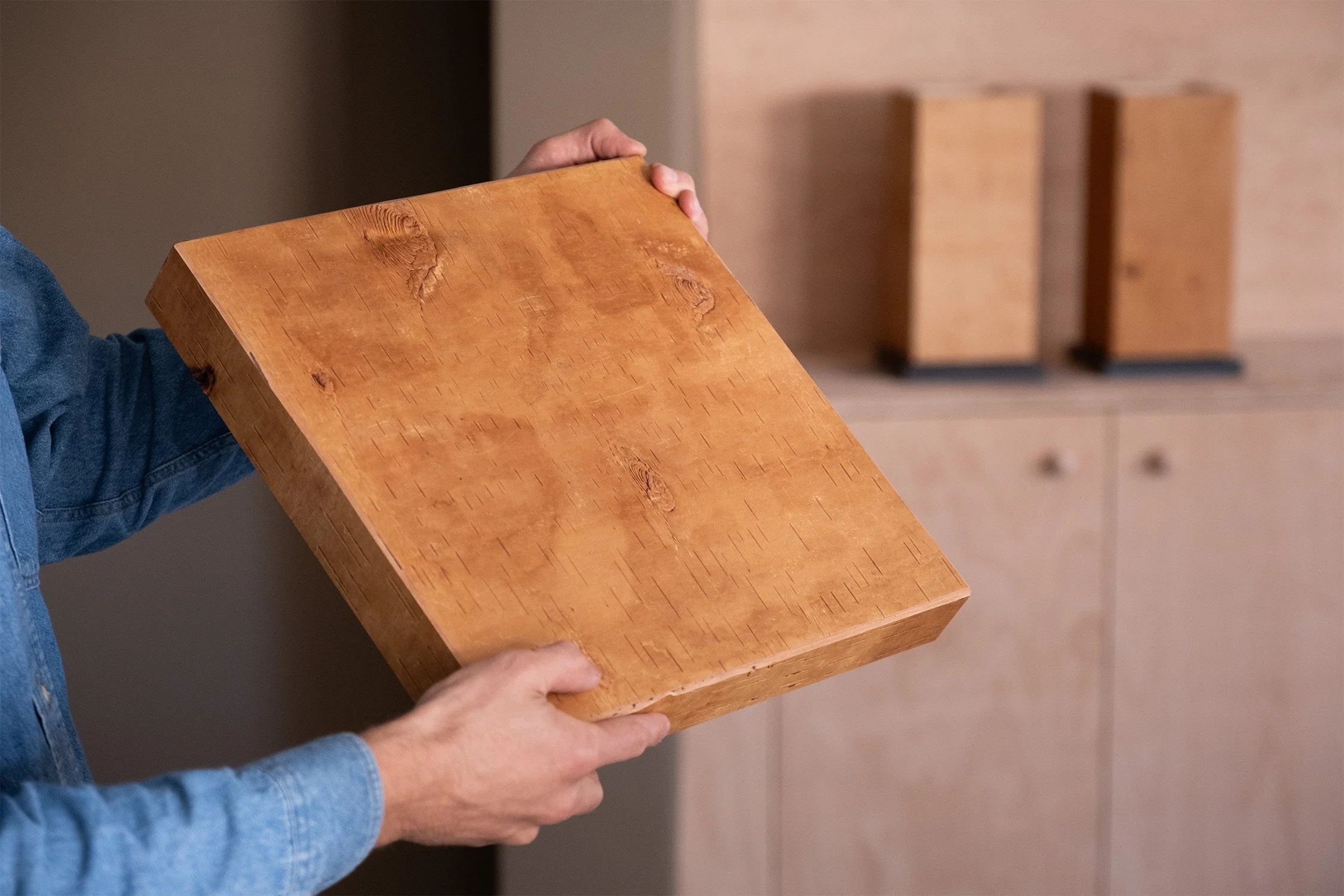
An early surface test.
In the workshop, my attention has turned to how the bark might be incorporated into contemporary forms. These initial surface tests explore how it behaves when brought into a precise form. My first exploration in furniture is a pair of side tables, which I will share in part 2 of this series. I hope these will be the beginning of a wider exploration of birch bark in furniture and objects.
